
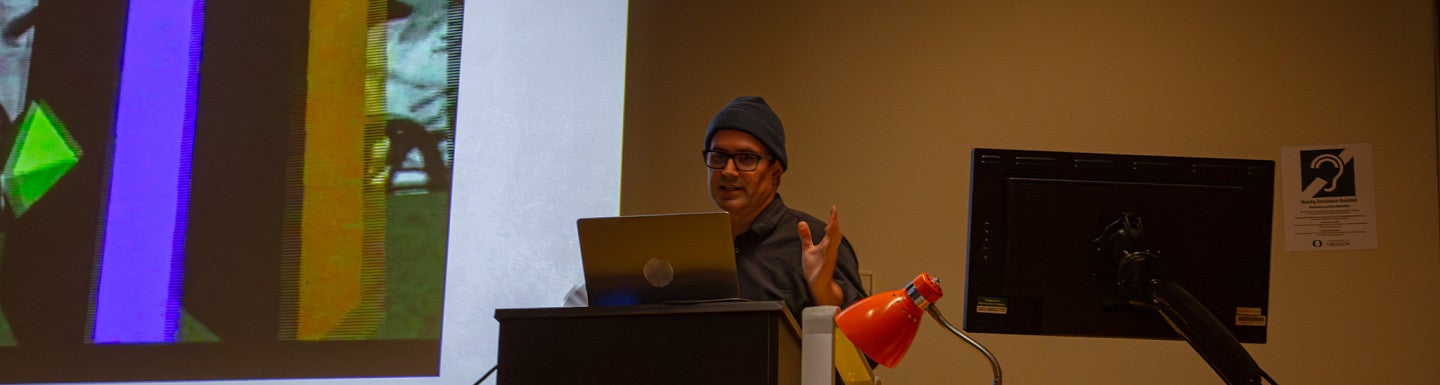
When artist Reza Safavi (MFA '06) returned to the University of Oregon in February 2026 for a visiting artist lecture and exhibition, he brought with him two decades of creative exploration at the intersections of art, technology, culture, and the natural world. His exhibition, Binging on the Biome, at the LaVerne Krause Gallery, offered an opportunity to encounter his work and reflect on the formative role that experimentation, collaboration, and critical inquiry played in his development as an artist.
Safavi noticed how much the gallery had changed since his graduate student days. "It looks so different in here," he remarked while refilling a bowl of saffron for his interactive work Saffron. "It feels so much bigger and better."
The familiar space may have changed, but the spirit of experimentation that Safavi remembers from his time at Oregon remains central to the Department of Art's MFA program. For Safavi, graduate school was not simply an opportunity to refine existing skills. It was a place to challenge assumptions about what art could be, explore unfamiliar technologies and ideas, and discover new directions through an active community of artists.
Art as a space for inquiry
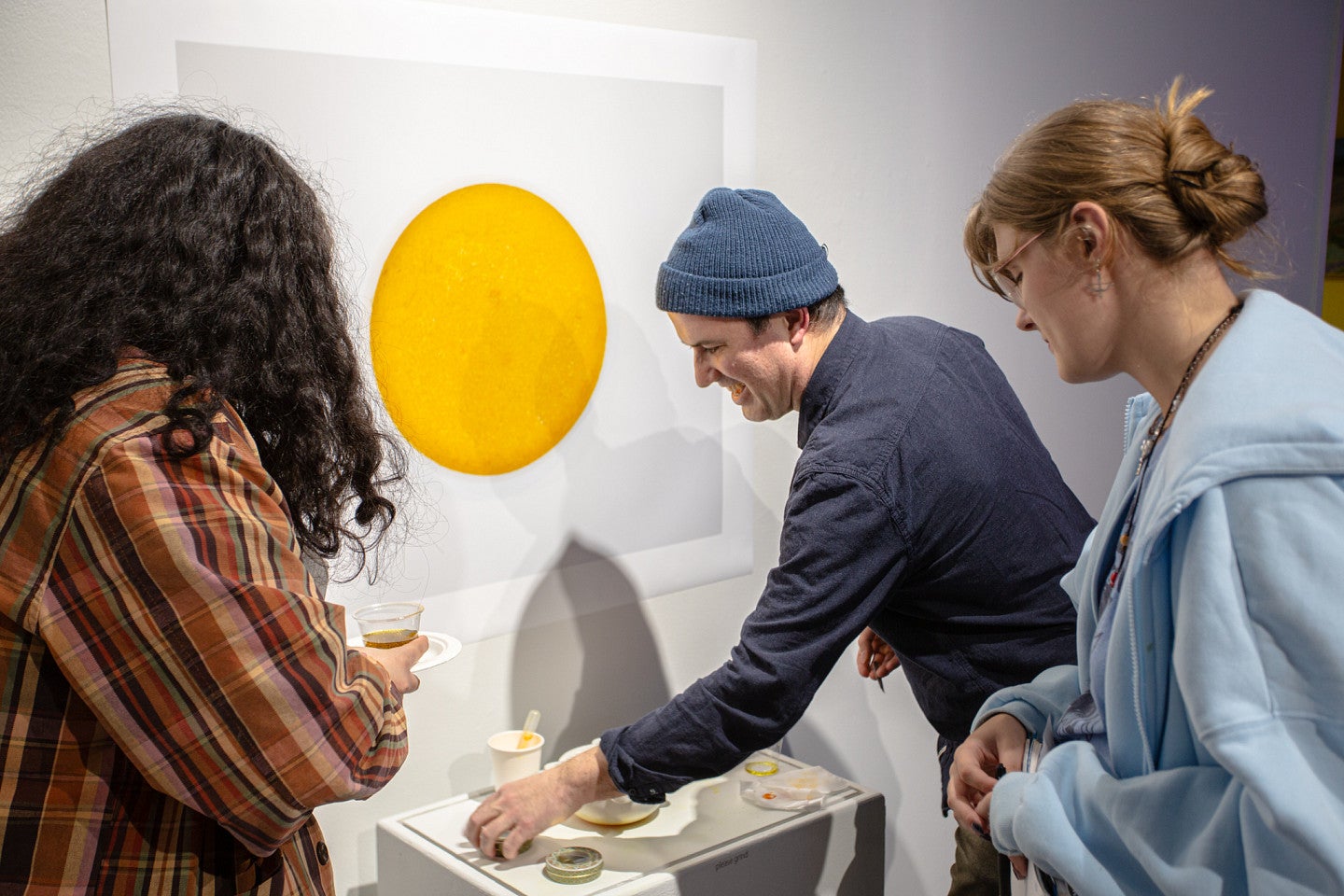
Safavi's artistic practice resists easy categorization. Working across sculpture, interactive media, video, game engines, sound, light, performance, and digital and analog technologies, he creates experiences that investigate how technological systems shape our perceptions of ourselves and the world around us.
His work frequently brings technological processes into unexpected relationships with physical materials, natural phenomena, and human behavior. Rather than treating technology as a neutral tool or an end in itself, Safavi uses it to explore the increasingly complex interfaces among communities, consciousness, culture, and the environment. The resulting works invite viewers to participate, encounter unfamiliar systems, and reconsider the boundaries between the physical and digital worlds.
His practice also reflects questions of cultural identity and belonging. Raised in Canada by a family with Iranian roots, Safavi came of age in a society increasingly engaged in conversations about multiculturalism and cultural identity. These experiences have informed his interest in the ways communities and technologies shape our relationships to one another.
After earning his BFA from the University of Victoria in British Columbia, Safavi entered the University of Oregon's graduate program in 2003. He was drawn to an environment where artistic inquiry could move across media and disciplinary boundaries, and where faculty and students were encouraged to challenge one another's ideas.
During his graduate studies, Safavi encountered visiting artists including Mel Chin, Eduardo Kac, and Steve Kurtz, whose work engages complex relationships among art, science, technology, and social systems. These encounters expanded his understanding of what an artistic practice might encompass and encouraged him to pursue questions that could not be contained within a single medium.
"You have to get out of your comfort zone," Safavi explained. "This also means forming good relationships with faculty and students to allow yourself to form that community [and support] to explore."
Finding a creative community
One of Safavi's most vivid memories of his MFA experience is the collaborative community he developed with fellow graduate students. During his second year, he helped establish the JIRCs, a group whose name was formed from the initials of its members.
The collective became a space for playful experimentation and ambitious collaborative projects. Working with video, electronics, performance, and unconventional exhibition spaces, the artists took their work beyond the studio and into the surrounding community and landscape.
"It was in my second year when we founded the JIRCs and we started to experiment and do a lot of performances with video, electronics and experimental spaces," Safavi recalled. The group organized live visual performances at the Eugene music venue and bar John Henry's, experimented with projects in the Oregon dunes and swimming pools, and developed a shared visual identity that included matching jumpsuits.
"We had a lot of fun together," he recalled. "We kind of started wearing these jumpsuits and they never came off. It was like this look, this aesthetic, so we called it Jerk (JIRC) Style."
Behind the humor and camaraderie was a serious commitment to experimentation. The JIRCs provided a setting in which artists could test ideas, learn from one another, and discover possibilities that might not have emerged through individual studio practice alone.
This combination of independent artistic development and rigorous collective engagement remains a defining feature of the University of Oregon's MFA in Art. The three-year program brings together artists working across eight studio areas, encouraging them to develop distinctive practices through sustained studio investigation, interdisciplinary coursework, critical dialogue, and close engagement with faculty and visiting artists. For Safavi, the most valuable aspect of this environment was the freedom to take risks within a community invested in his development.
Twenty years of exploration
The creative approach Safavi developed during his MFA has continued to evolve through exhibitions, residencies, and collaborations in the United States and internationally. His projects move between emerging technologies and physical experiences, often drawing attention to the ways digital systems mediate our understanding of place, community, and the natural environment.
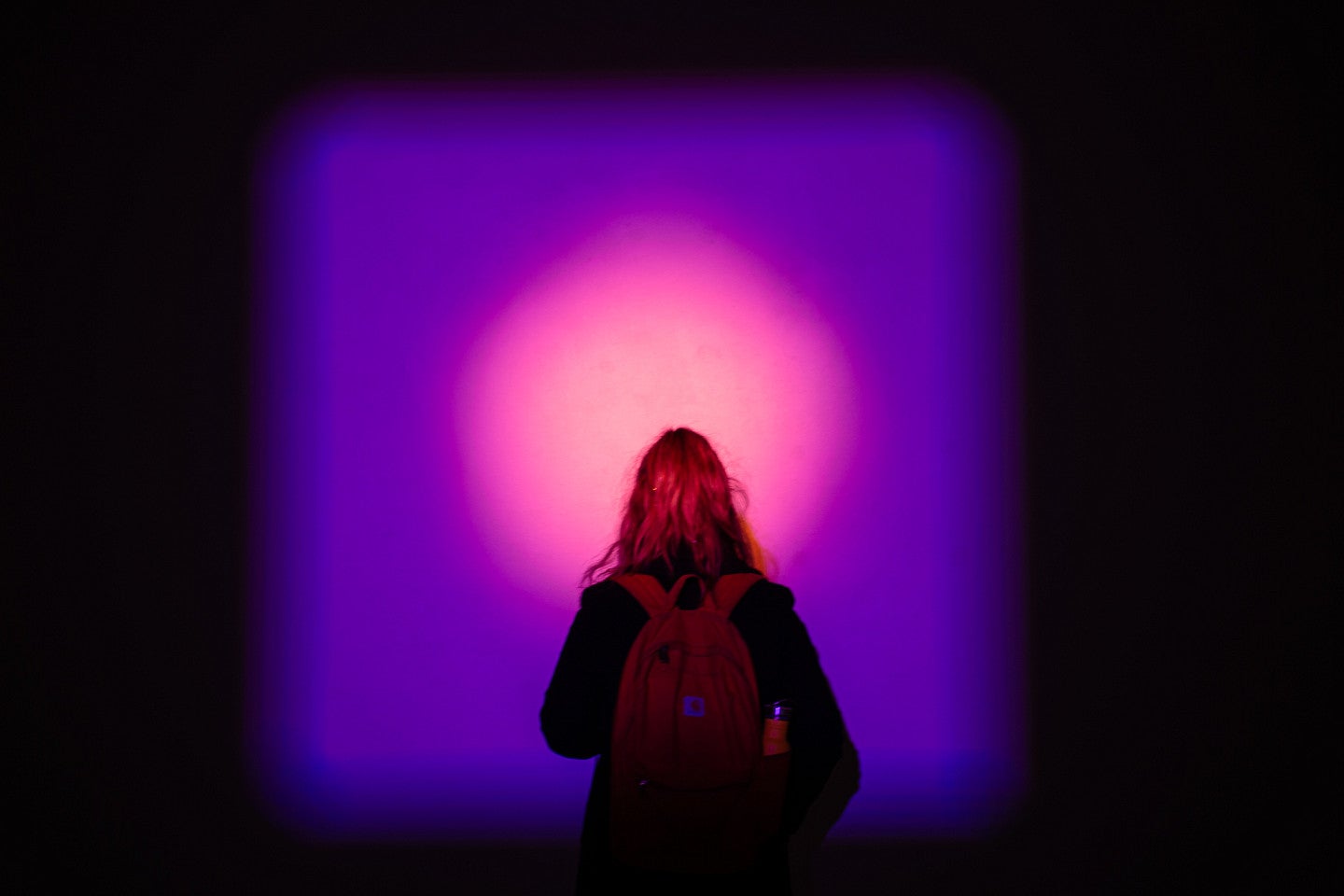
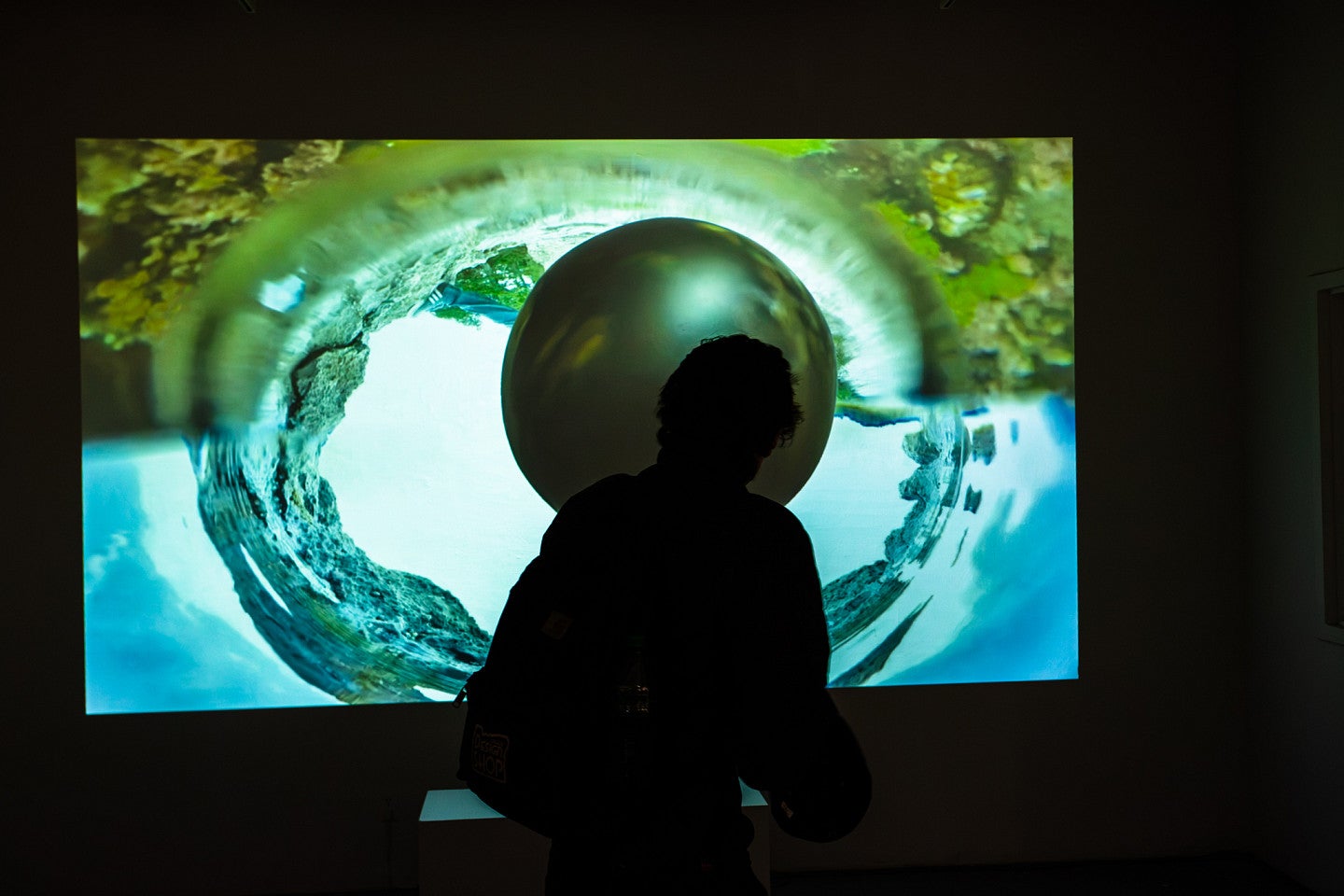
His recent work, including two pieces featured in Binging on the Biome, illustrates the breadth of this inquiry. In biolume (2025), an interactive installation incorporating living marine phytoplankton, Safavi creates an encounter between biological processes and technological systems, inviting viewers to consider the relationships between living organisms, human intervention, and the environments we share. In Tidal Wanderings (2021), an interactive installation, he similarly explores the intersection of digital technologies and our experience of the natural world. Together, these works reflect his ongoing interest in how technology can mediate our encounters with the environment, while opening up new possibilities for participation, perception, and reflection.
These works reflect a sustained interest in what happens when different systems of knowledge and experience intersect. For Safavi, the significance of technology lies not simply in what it allows an artist to produce, but in how it can alter perception, create new relationships, and make otherwise overlooked processes available for consideration.
His return to Eugene for Binging on the Biome, presented through the LaVerne Krause Lectures and Exhibitions endowment, brought these ongoing investigations into conversation with a new generation of artists. The endowment supports exhibitions and lectures by Department of Art alumni, creating opportunities for current students to encounter the evolving practices of artists who once worked in the same studios and participated in the same graduate community. During his visit, Safavi emphasized the importance of embracing the opportunities available within a university setting, particularly the freedom to explore ideas without knowing in advance where they will lead.
"While you are here, [especially at the university], you need to make use of the many, many resources [here]. Take classes, connect with students, [and] connect with faculty," he advised. "Don't worry about failing, go beyond!"
An enduring influence
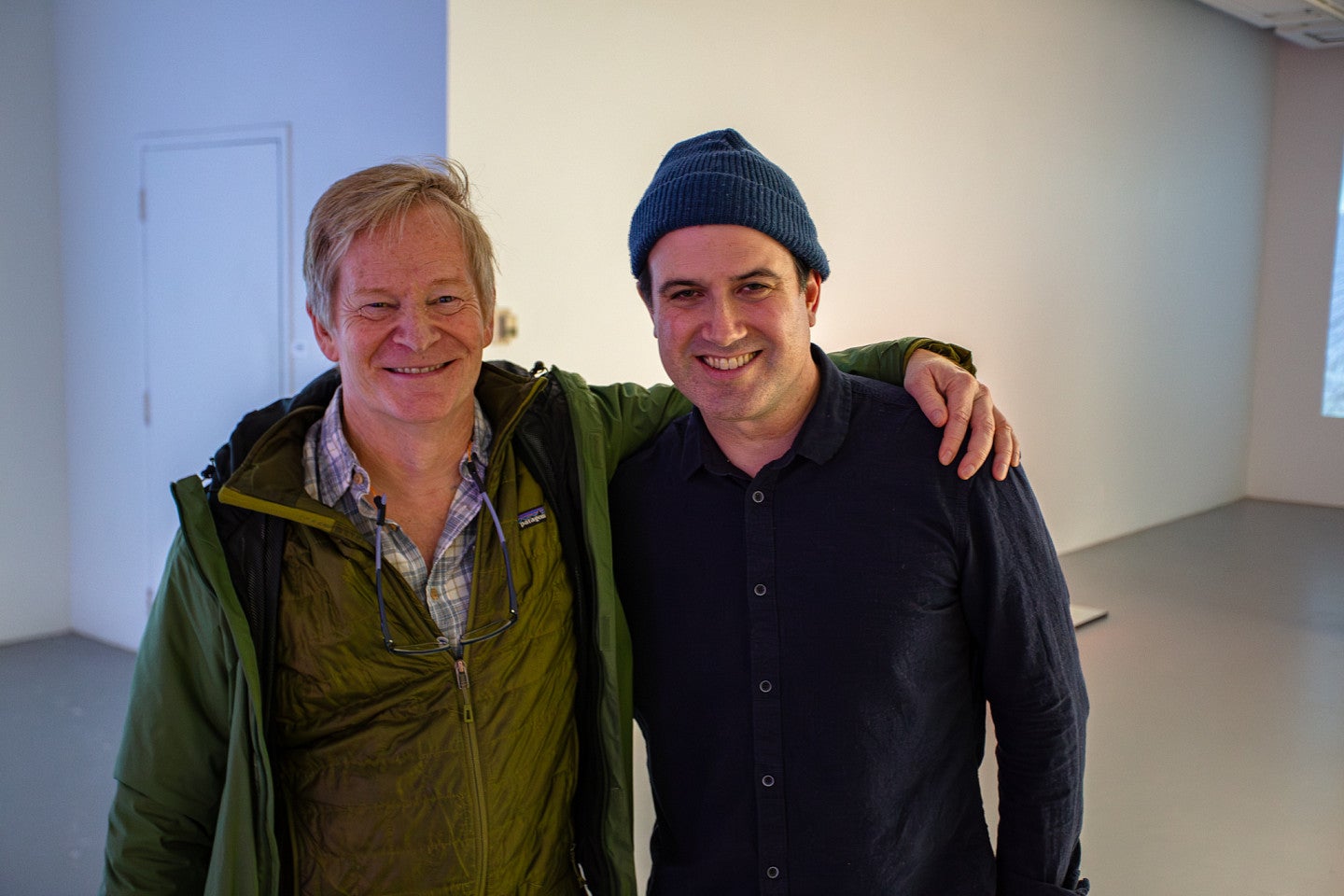
Safavi credits his graduate experience and relationships with faculty as essential to his development. He remembers working with Craig Hickman, Kartz Ucci, Amanda Wojick, Colin Ives, Dan Powell, and Michael Salter, whose varied artistic perspectives helped expand his understanding of contemporary practice.
"I wouldn't be here today if it wasn't for the faculty," Safavi said. He spoke with particular affection about Ucci, who joined the department during his time as a student and became an important mentor and friend before her death in 2013.
Today, Safavi is a Professor and Coordinator of Digital Media in the Department of Art at Washington State University, where he brings his interdisciplinary experience to teaching the next generation of artists while continuing his own active exhibition practice.
His trajectory illustrates an important dimension of graduate education in the arts: its value extends well beyond the work produced during a degree program. The deeper contribution lies in cultivating the curiosity, critical perspective, adaptability, and commitment to inquiry that allow an artist's practice to continue evolving over a lifetime.
Twenty years after completing his MFA, Safavi's work continues to embody that spirit. His return to Oregon was not simply an occasion to revisit the past, but an opportunity to demonstrate how the creative relationships and intellectual challenges of graduate school can remain productive long after an artist leaves campus.