
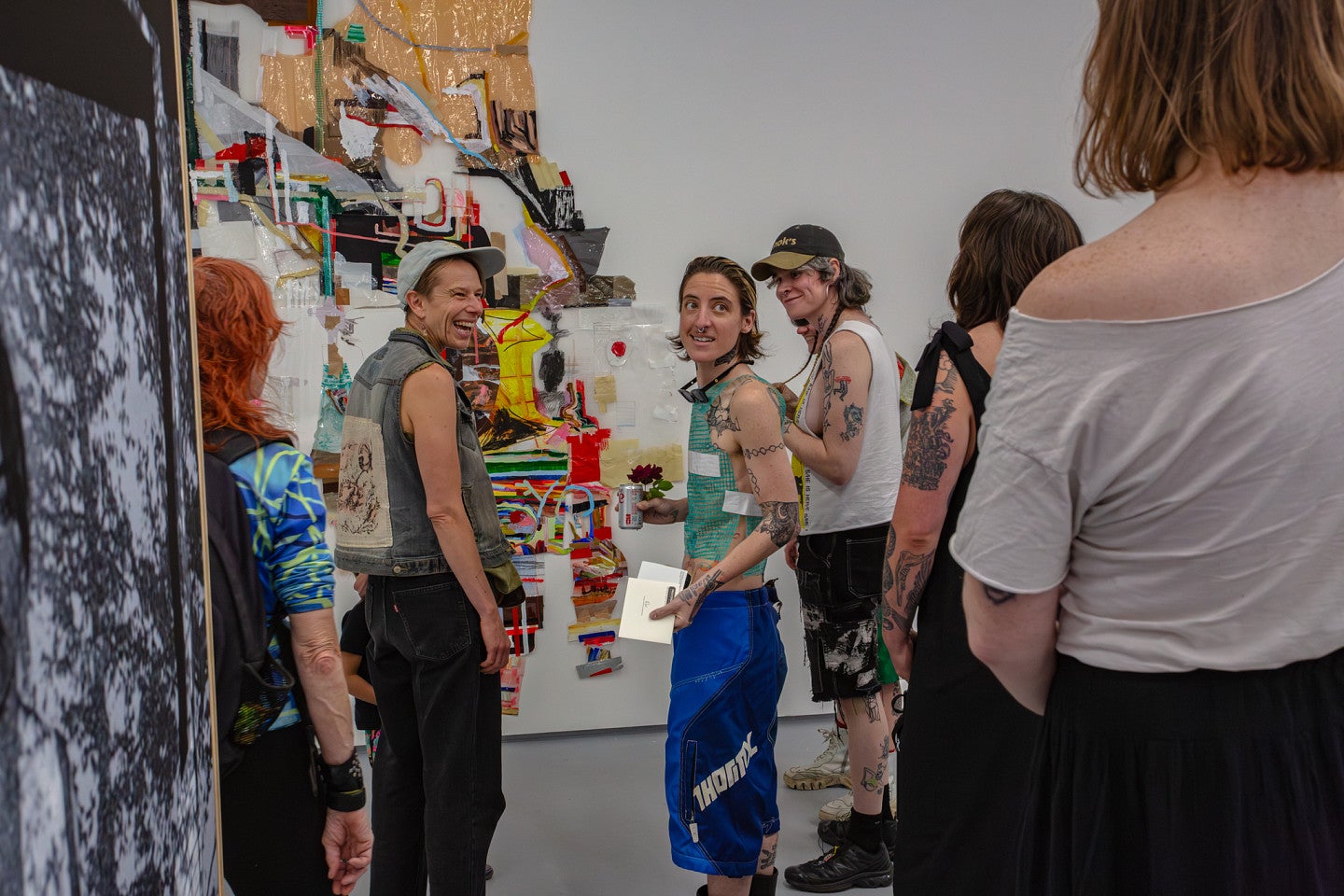
A new achievement was earned by the Department of Art's MFA '26 student, Elri Friedman, when they were one of four students selected nationally for the 2026-27 Dedalus Foundation MFA Fellowship in Painting & Sculpture. The Dedalus Foundation is committed to a mission of fostering greater public understanding of modern art and modernism. It achieves this mission through the funding of its various programs, fellowships, and awards programs. Over the Department of Art MFA program's hundred-year, award-winning history, such as a top 34 national ranking according to US News and World Report and a top four graduate program at the University of Oregon, this particular fellowship would be a first for the University of Oregon (UO) and the School of Art + Design. Friedman's stunning and well-earned achievement was an exciting development for the artist and community arts organizer.
"The ability to not be constantly focused on the logistics of my immediate survival is an uncommon privilege. So often my thinking is largely comprised of an abstract equation solving for money, time, energy, health, and art capacity for the next month, and for an extended moment, I get to not do that math. What a gift! To be able to think about other things," mused Friedman.
Friedman's journey to the MFA program was shaped by their time in Seattle's DIY arts community. There, Friedman worked as a teaching artist, a tattoo artist, and community arts organizer, experiencing a scene that is consistently shaped by change and experimentation. Friedman's work is often inspired by their experience of the improvisational conditions in the performance and techno spaces in their Seattle community. They also have an interest in the political history of abstraction, particularly its contradictory mobilization as both a site of resistance and a tool of ideological control. This complex and colorful combination of factors would inspire Friedman to eventually take their talents to a graduate program.
"Like so many painters, I did not decide to make paintings because I was a fan of painters or particular paintings, but a student in-earnest and more directly to color and shape and composition. I’ve also always been influenced by musicians and performers and people doing things that don’t neatly resemble or count as art in the obvious sense," explained Friedman. "Before entering my MFA, making things seemed to be the single, unwavering thread in my adult life. I did it because I needed to and because I loved it, and because it felt infinitely generous, like being seated at the foot of a wellspring that never dried. If something gives you so much, so consistently, and with miraculous offerings, it seemed logical to devote and show up more fully for it."
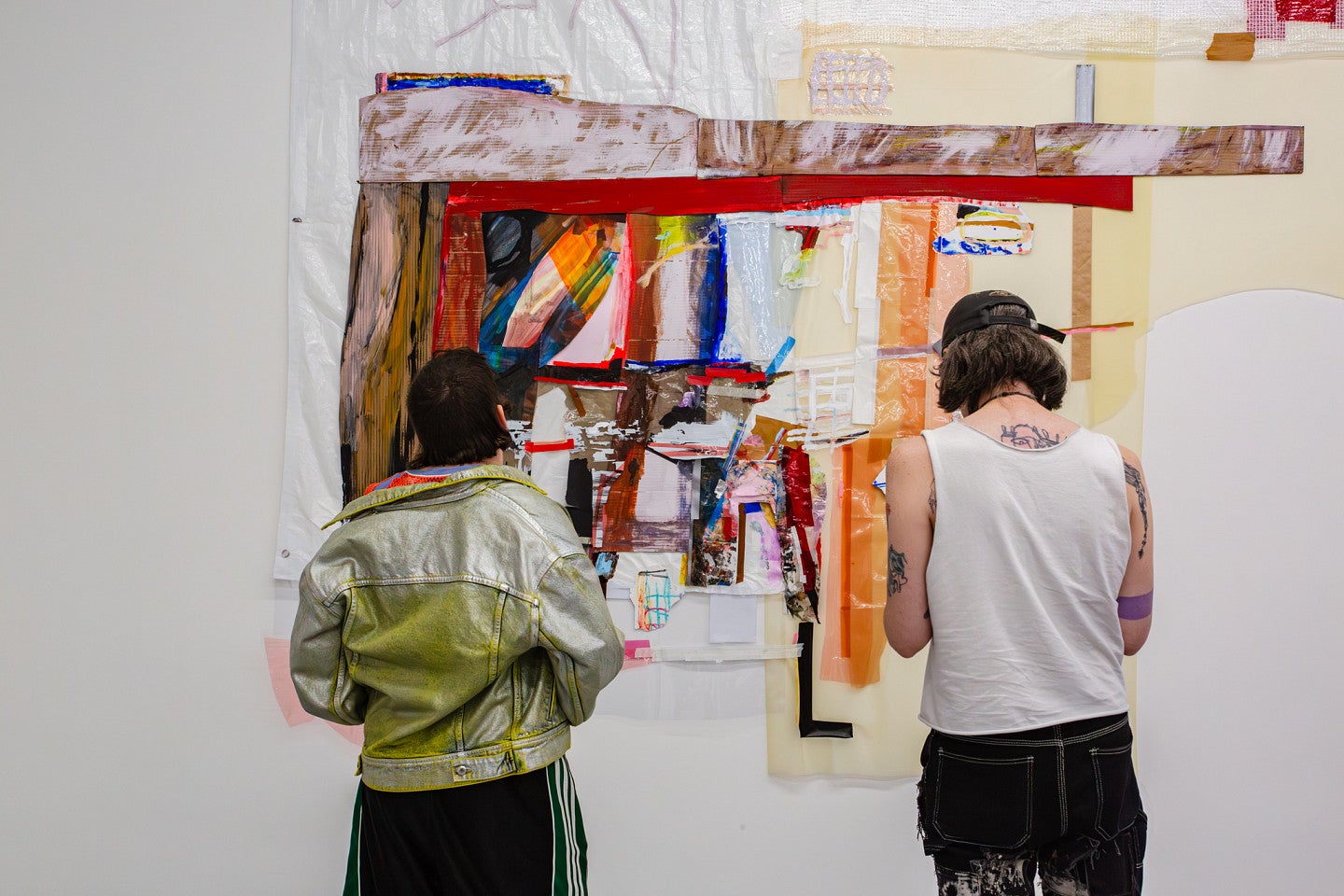
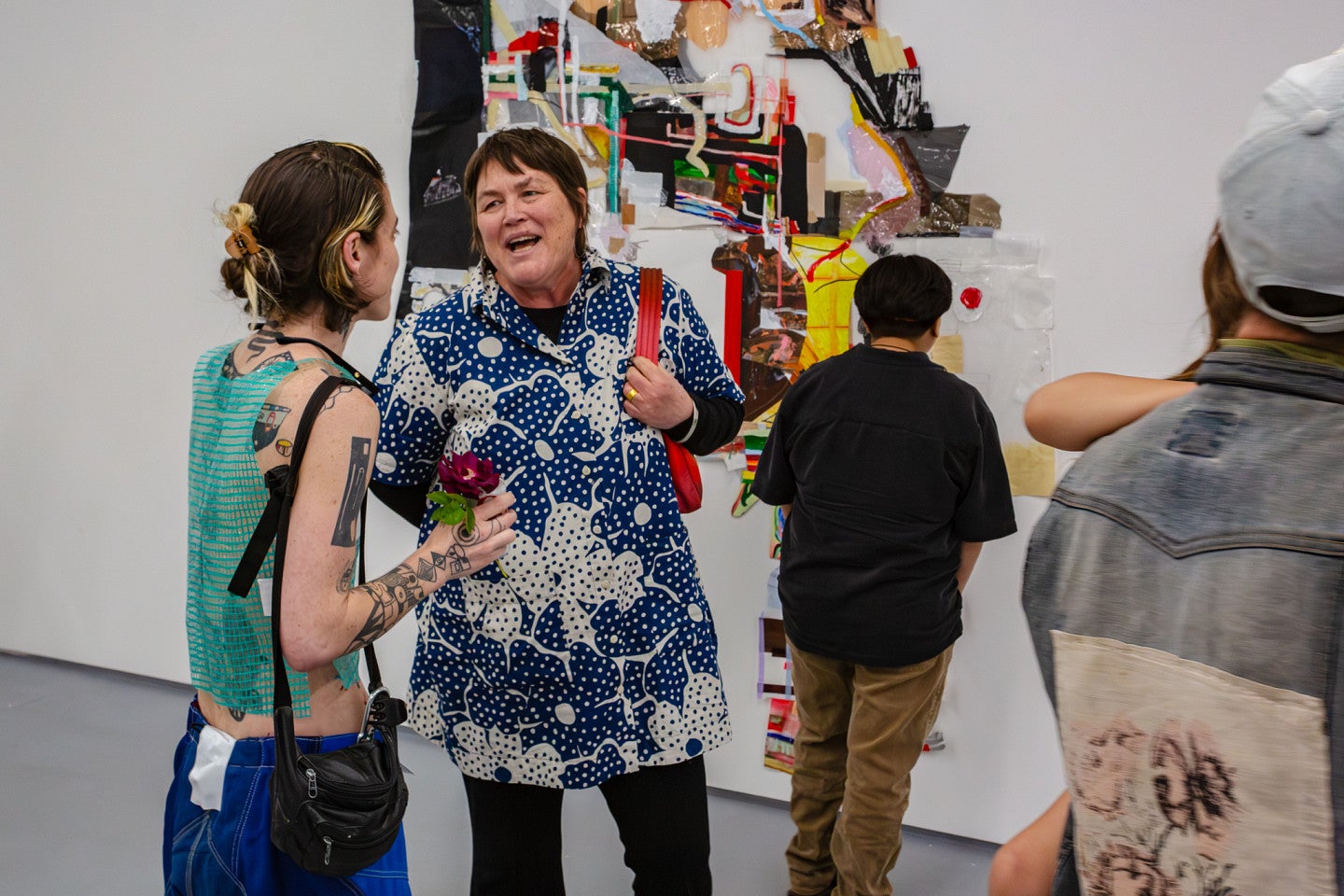
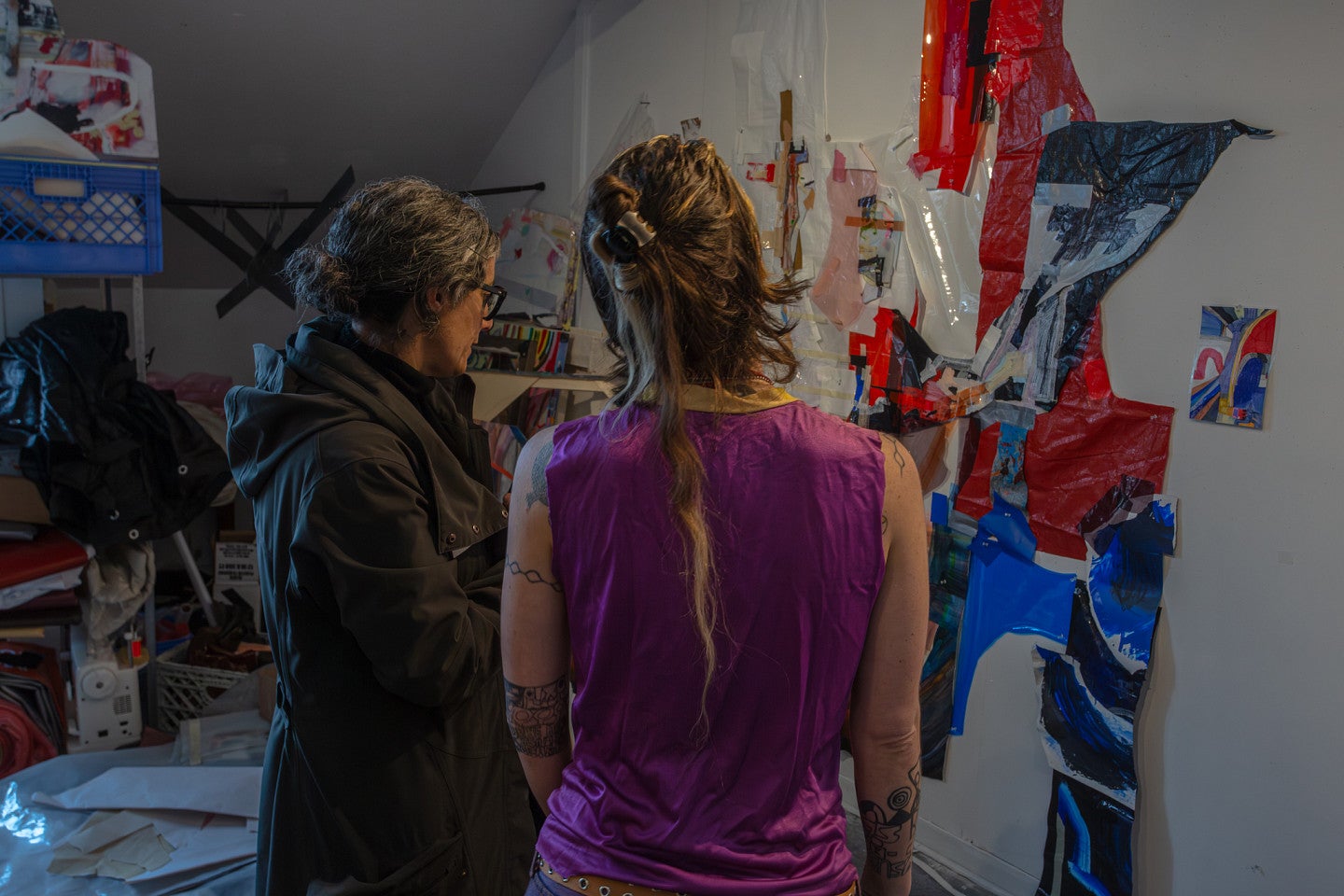
This passion and novel perspective comes through in Friedman's pieces, where one can see the recombination of paintings, tape, tarps, and other plastics into abstract compositions. Friedman explains that their "work is rooted in the wound and the lived body" blending a piece's "mending and mark-marking" to become indistinguishable in the creation of the new amalgamated work. Professor Anya Kivarkis would surprise Friedman with a nomination to the program. When the award was given, Friedman found themselves contending with a welling of strong emotions.
"I was in complete ecstatic shock. I could not form words, but a few tears fell. My studio mate, Jamie, was in the hallway and all I could do was shout their name!" said Friedman. "In the days that followed I was more able to grasp the news, and I’ve felt immense gratitude not just for the grant itself, but also for the past three years of being in focused devotion to process, the space and time my MFA has afforded me to do so, and the mentors and peers who have shaped my practice during my time here."
In a further reinforcement of Friedman's talent, the artist would earn an additional, prestigious feather in their cap: a fellowship in the Fulbright US Student Program. As one of one hundred and seventy-nine cohort, Friedman will spend the next year in Germany researching the tenuous history of abstraction and artwork censored under National Socialism. Their research will be completed in affiliation with the Universidät der Künste Berlin, and make use of several archives in Berlin. The Fulbright experience champions the ideals of empathy, resilience, and courage to help its alumni and grantees chart new paths to advance knowledge and effect positive change in societies and the world.
Regarding their Fulbright research Friedman remarked, “Within the history of abstraction, I remain curious about the possibility and limitations reclaiming painterly vernaculars historically associated with both erasure and radical subjectivity, and want to build upon established scholarship in art theory and visual culture that examines abstraction’s formal qualities alongside its ideological functions, particularly in relation to identity, power, and the contested legacies of modernism, especially during this moment of rising global fascisms.”